
Labor Costs and Productivity
What does the Labor Costs and Productivity dataset cover?
The Labor Costs and Productivity dataset publishes the Total Employer Cost for four labor roles — Chemical Plant Operator, Chemical Plant Supervisor, Manufacturing Labor, and Construction Labor — across the 33 countries tracked in the Industry Economics & Competitiveness report. The Total Employer Cost is the complete cost of employing a worker, carried on a common basis so countries compare directly. Alongside these cost figures, the dataset publishes two productivity factors — one for manufacturing labor and one for construction labor — that capture how much output a worker delivers. Together, the two views describe both what employers pay and what that spending yields. The Chemical Plant Operators series shows this figure for one role and country.
How are labor costs reported across roles, and in what units?
Summary
Each role is published as one fully-loaded Total Employer Cost per unit of labor time (USD per hour or per year, on a common basis), reported alongside separate manufacturing and construction productivity factors.
Each of the four roles is published as a single Total Employer Cost — the complete cost of employing that worker for an hour of labor, combining directly paid wages, benefits, and the mandatory contributions and overhead an employer carries beyond take-home pay. Reporting one fully-loaded figure per role keeps the comparison clean: a country with low headline wages but heavy mandatory on-costs is not made to look cheaper than it is.
Figures are expressed as a monetary cost per unit of labor time — USD per hour or per year — stated in USD on a common basis so the 33 countries compare directly.
Alongside the cost figures, the dataset publishes two productivity factors — one for manufacturing labor and one for construction labor — that scale each country's labor cost by how much output a worker delivers. These factors are what let the report compare countries on cost per unit of output rather than on raw wages.
How do labor costs connect to productivity-adjusted scoring?
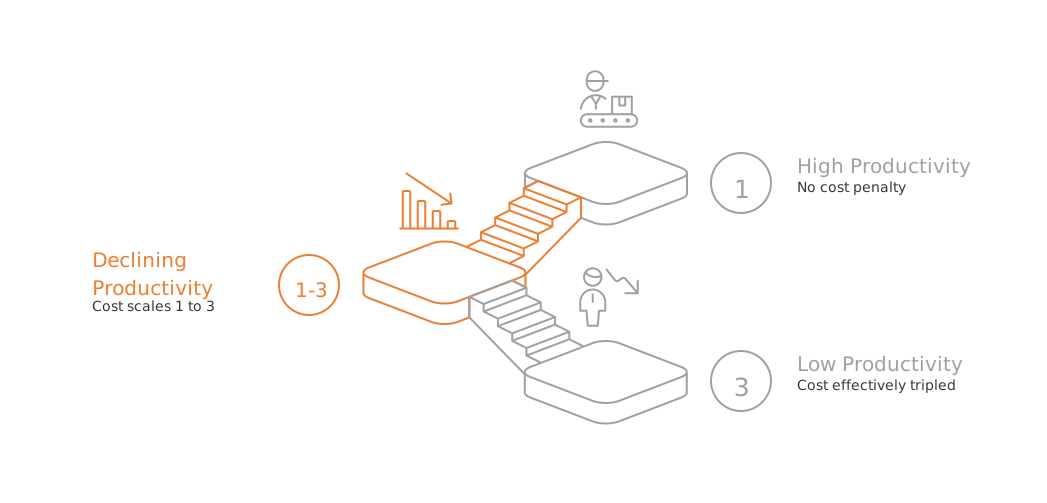
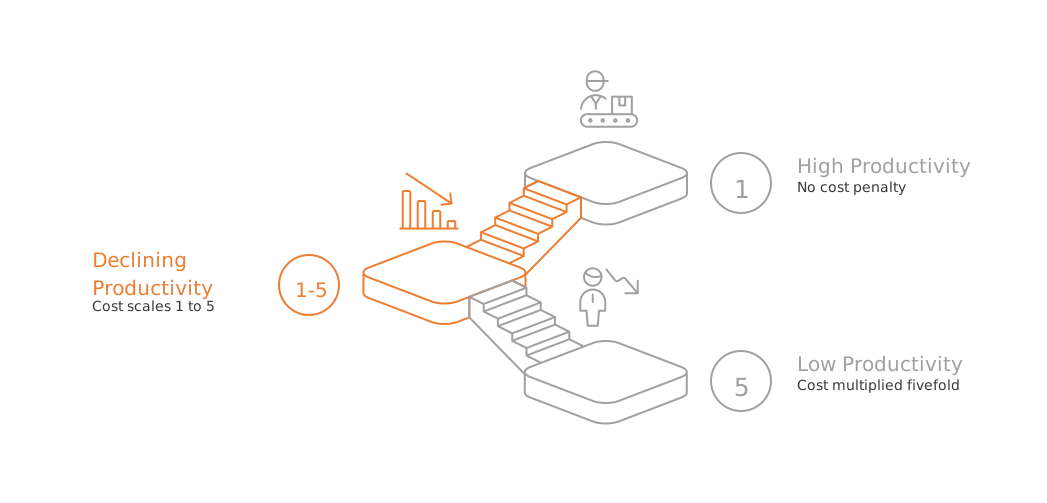
The Labor Costs and Productivity dataset is the foundation for the Manufacturing Labor Costs and Construction Labor Costs pillar scores in the report. The productivity factor, anchored at 1.0× for the most productive country and rising to about 3× for manufacturing roles and 5× for construction roles where output per worker is lowest, lets the scoring compare countries on cost per unit of output rather than raw wages. As a result, a country with higher wages but greater productivity is not unfairly penalized relative to a low-wage, low-output peer. The construction factor spans the wider range of the two, reflecting greater cross-country variation in construction-sector productivity than in manufacturing. For how these adjusted figures translate into pillar rankings, see the Scores and Ranks page.