

Data Status Labels
What do the Final, Preliminary, and Forecast labels mean?
Intratec marks every figure with one of three status labels that signal how mature, or settled, the value is. Final denotes verified official statistics — the settled value that is not expected to change. Preliminary denotes a model-generated estimate that temporarily stands in while official data is unavailable or lagging, and that will later be revised. Forecast denotes a forward-looking, machine-learning model prediction for periods that have not yet been reported by any source.
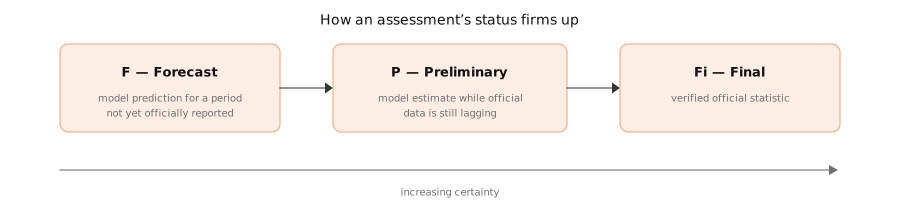
What moves a figure from Preliminary to Final?
Once official statistics for a period are released and verified, the model estimate is replaced by the confirmed official value, and the label updates from Preliminary (P) to Final (Fi). That Preliminary label is applied earlier in the same figure's life, as soon as the relevant official source data has not yet arrived — typically a source lag of one to three months — and a model estimate stands in its place; it signals that the value is an interim estimate rather than a confirmed statistic, and that a revision is expected. Throughout this lifecycle, the status label appears directly alongside each value in Intratec's data tables and charts, so a reader can always identify a number's maturity and basis at the point of reading it, without consulting separate notes.